
Artistic Work Copyright in India — Quick Answer
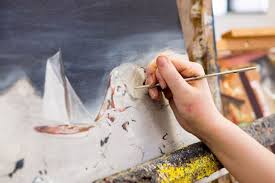
Paintings, drawings, photographs, sculptures, graphic designs, logos, engravings, and works of artistic craftsmanship are all protected as "artistic works" under Section 2(c) of the Copyright Act, 1957. This protection arises automatically from the moment of creation — you do not need to register to have copyright in your artwork.
However, registering your artistic work with the Copyright Office of India is strongly recommended before licensing, selling, or exhibiting your work commercially. Registration creates a public record of ownership, serves as prima facie evidence in court, enables DMCA takedowns for online infringement, and is required by many galleries, publishers, and merchandise manufacturers as proof of copyright ownership.
💡 Originality, not quality or skill, is the test for copyright. An artwork only needs to be an original expression of the creator — it does not need to be "good" or "unique" in concept. A basic sketch drawn by you is as fully protected as a masterpiece.
What is an Artistic Work Under Indian Copyright Law?
Section 2(c) of the Copyright Act, 1957 defines an artistic work broadly to include:
Paintings and Drawings: All original paintings — oil, watercolour, acrylic, digital, mixed media — and drawings of every kind, including architectural drawings and technical drawings, are protected as artistic works.
Photographs: Every original photograph is an artistic work under Indian copyright law, regardless of the subject matter or medium. The photographer is the first owner of copyright in the photograph. Even a photograph taken on a smartphone, if original, is protected.
Sculptures and Artistic Craftsmanship: Three-dimensional works — sculptures, installations, ceramics, jewellery, furniture with original artistic design, and objects where the artistic design is not purely functional — qualify as artistic works. The phrase "works of artistic craftsmanship" in the Act extends protection to high-quality handcraft.
Graphic Design and Digital Art: Logo designs, brand identity elements, illustration, digital paintings, graphic compositions, UI/UX design elements, and infographics are all protected as artistic works. This is particularly relevant for designers and agencies.
Engravings: Etchings, engravings, lithographs, woodcuts, and prints — including the plates or molds from which they are produced — are separately protected as artistic works.
Architecture (Section 2(b)): Architectural works are separately categorized and protected. The copyright in an architectural work covers both the building itself and the drawings and plans for the building.
Maps, Charts, and Plans: Original maps, charts, plans, and diagrams, including those prepared for technical or scientific purposes, receive copyright protection.
Photography Copyright — Protecting Your Images in India
Photography copyright is one of the most commonly violated forms of artistic copyright in India. Every original photograph is protected from the moment of capture.
Who Owns the Copyright in a Photograph: The photographer who presses the shutter is the first owner of copyright. This applies regardless of whether the photograph was taken on a professional camera or a smartphone.
Important Exception — Commissioned Photography: Under Section 17 of the Copyright Act, if a photograph is taken for valuable consideration at the instance of another person (i.e., a commissioned photo shoot), that other person (the client who paid for the shoot) is the first owner of copyright — not the photographer. This is a critical distinction for: Wedding photographers (client owns copyright unless contract says otherwise) Commercial photographers (client who commissions the shoot) Corporate portraits and product photography
Photographer's Contract Advice: Professional photographers should always have a written contract specifying copyright ownership. Without a contract, the commissioning client owns copyright. Most professional photographers include a clause retaining copyright and granting a license to the client instead.
Common Online Infringement of Photography: Using images from Google Images without purchase/license Downloading stock photos without paying for the license Screenshotting social media photos and using them commercially Using a photographer's event photos without permission
Stock Photography: Images from platforms like Shutterstock, Getty Images, Adobe Stock, and iStockPhoto are licensed, not sold. The license terms define what uses are permitted. Commercial use typically requires a higher-tier license.
💡 Commissioned photography default: The CLIENT who pays for the shoot owns copyright in India — not the photographer. Photographers: always include a copyright retention clause in your contract. Without it, you may not own your own images.
Graphic Design and Logo Copyright in India
Graphic designers and brand agencies face unique copyright challenges because their work is inherently commercial and frequently reused without proper licensing.
Designer's Copyright vs Client's Right to Use: When a designer creates a logo, brand identity, or design for a client: Without a written assignment: The designer retains copyright With a written assignment: Copyright transfers to the client Most commercial design contracts include an assignment clause transferring copyright to the client upon full payment
What If There Is No Written Contract? The designer owns copyright. The client has an implied license to use the design for the purpose it was commissioned — but cannot stop the designer from using the same design for other clients, and cannot prevent the designer from asserting copyright if the design is infringed by third parties.
Logo: Copyright + Trademark = Complete Protection: A logo receives both copyright protection (as an artistic work) and trademark protection (as a brand identifier) simultaneously. Copyright prevents exact copying of the artwork. Trademark prevents confusingly similar use in commerce. For business logos, both registrations are recommended.
Fonts and Typography: Font software (the digital font file) is protected by copyright as a computer program. The visual shapes of letterforms (the actual glyphs) have limited copyright protection in India — courts have generally held that individual letterforms lack sufficient originality. However, a unique, original typeface design as a whole artistic work may receive protection.
UI/UX Design Elements: Original UI design elements — custom icons, original illustrations used in interfaces, unique layout compositions — are protected as artistic works. Functional design elements (standard buttons, navigation patterns) may not qualify if they lack originality.
Artistic Work Copyright Registration — Process and Documents
Documents Required: 1. Application Form XIV (Copyright Office) 2. Power of Attorney (Form I) — if filing through an attorney 3. High-resolution digital copy or printout of the artwork 4. Statement of Particulars (Form V) — description of the work, creation date, whether published or unpublished 5. Identity proof — PAN + Aadhaar (individuals); COI + PAN + authorized signatory (companies) 6. NOC from any co-creators if the work has multiple authors
For Photographs: Provide the original high-resolution image file, creation date (from EXIF data is useful), and a description of the subject and creative choices involved.
For Graphic Design / Logos: Provide the vector or high-resolution raster file, original creation files if available (Adobe Illustrator/Photoshop), and description of the design elements and their originality.
For Sculptures and 3D Works: Provide clear photographs from multiple angles showing the work.
Registration Process: Day 1: Application filed on copyright.gov.in → Diary number issued immediately Days 1–30: Mandatory 30-day waiting period (objection window) Days 30–90: Copyright Examiner review → Registration Certificate issued
**Contact:** +91 89594 20521
Artistic Copyright Infringement — Enforcement and Remedies
Artistic copyright infringement is widespread in India, particularly online. Common violations include:
Common Infringement Scenarios: Printing an artist's illustration on merchandise (T-shirts, mugs) without permission Using a photographer's images on a website without purchase or license Reproducing a logo in a competing business's marketing materials Cropping a photographer's watermark and reposting images Using copyrighted artwork as social media profile pictures or headers Creating "inspired by" products that reproduce protected artistic elements
Legal Remedies Available:
*Civil Action (Section 55):* Injunction: Immediate court order stopping the infringement Damages: Compensation for financial loss (lost licensing revenue, reputational damage) Account of Profits: Infringer must disgorge all profits from unauthorized use Delivery Up: Confiscation and destruction of infringing items
*Criminal Action (Section 63):* Imprisonment 6 months to 3 years + fine ₹50,000 to ₹2,00,000. Particularly relevant for counterfeit merchandise operations.
*Online Takedowns:* Google DMCA: Remove infringing images from search results Social media IP reports: Remove infringing posts within 24–72 hours Marketplace enforcement: Remove infringing merchandise listings from Amazon, Flipkart
Reverse Image Search — Finding Infringers: Use Google Images or TinEye reverse image search to find unauthorized uses of your photographs and artwork online. Document all instances before sending cease and desist letters or platform reports.
Moral Rights of Artists in India
India's copyright law provides strong moral rights for authors of artistic works under Section 57 of the Copyright Act, 1957. Unlike economic rights (which can be assigned or sold), moral rights are personal to the creator and cannot be transferred.
Right of Paternity (Attribution): The author has the right to claim authorship of the work — to be identified as the creator of the artwork. This right persists even after the economic copyright has been assigned to another party.
Right of Integrity: The author has the right to object to any distortion, mutilation, modification, or other derogatory action in relation to the work which would be prejudicial to their honour or reputation. This right persists even after economic copyright assignment and even after the copyright term expires (during the creator's lifetime).
Practical Applications: A commissioned artist can object if a client severely distorts or mutilates their artwork A photographer can demand attribution even if they assigned copyright to a client An architect can object if a building is modified in a way that damages their reputation A graphic designer can object to colorization or cropping that harms their artistic integrity
Moral Rights After Death: The legal representatives of the author can exercise the right of integrity after the author's death to protect the deceased author's reputation.
Moral Rights vs Economic Rights: Moral rights exist independently of copyright ownership. Even if you sell your painting (physical object) or assign your copyright, you retain moral rights. The buyer of a painting cannot mutilate it in a way that damages the artist's reputation — the artist can go to court to stop them.
💡 Moral rights in India cannot be sold or assigned — they are permanent. An artist can always claim attribution (right to be named as creator) and always object to distortion that damages their reputation, even after selling the work or assigning the copyright.
Frequently Asked Questions
Is a photograph taken by a tourist on vacation copyrighted in India?+
Can I copyright traditional Indian art forms like Madhubani or Warli paintings?+
Does an artist's estate own copyright after they die?+
Can I paint a copy of a famous painting and sell it in India?+
How do I protect my Instagram artwork from being copied in India?+
Who owns the copyright in a logo — the graphic designer or the client who commissioned it?+
Written by
Online Legal Mitra Editorial Team
Editorial Team
Need Help with Copyright?
Get expert guidance from our professionals. Book a free consultation today!
Chat on WhatsAppRelated Articles
Continue reading with these related articles
Copyright vs Trademark in India 2025 — Key Differences, Which Do You Need?
Copyright and trademark are both intellectual property protections but protect entirely different things. Copyright protects creative works automatically; trademark protects brand identity and requires registration. Learn which one your business needs — and when you need both.
Read ArticleSoftware Copyright Registration India 2025 — Protect Your App, Code & Website
Software and computer programs are protected by copyright in India. Learn how to register copyright for your app, website code, or software to prevent copying and enforce your rights against infringers.
Read ArticleCopyright Infringement India 2025 — What to Do When Someone Copies Your Work
If someone has copied your book, music, software, design, or creative work in India, you have powerful legal remedies under the Copyright Act, 1957. Learn what constitutes infringement, how to file complaints, and how to stop infringers quickly.
Read Article