
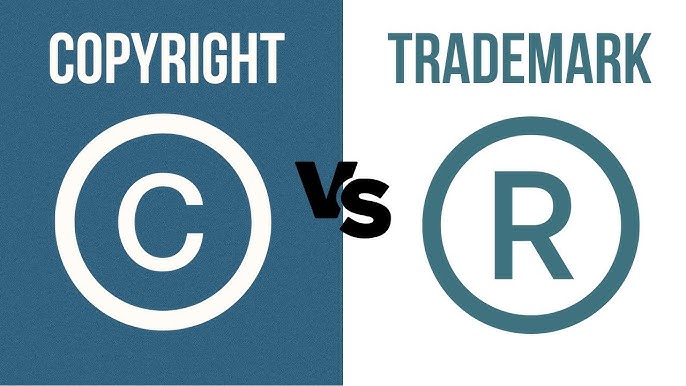
Copyright vs Trademark — Quick Answer
Copyright and trademark are two distinct types of intellectual property (IP) protection under Indian law. A trademark protects your brand identity — the name, logo, or slogan that identifies your business in the market — under the Trade Marks Act, 1999. Copyright protects original creative works — books, music, software, paintings, films — under the Copyright Act, 1957.
The most important difference: copyright arises automatically the moment you create an original work. Trademark rights, however, must be actively registered with the Trademark Registry of India to be fully enforceable. For businesses, trademark registration gives exclusive market rights to your brand name and prevents competitors from copying your identity. Copyright protection prevents others from reproducing or distributing your creative content without permission.
Most businesses need both: trademark to protect the brand, copyright to protect the content. Online Legal Mitra handles both — trademark registration from ₹1,499 and copyright registration from ₹2,999. Contact: +91 89594 20521.
💡 Copyright is automatic — no registration needed for protection to exist. Trademark is not automatic — you must file and register to get legal exclusivity over your brand name and logo.
What is a Trademark? What Does It Protect?
A trademark is any distinctive sign, symbol, word, logo, phrase, or combination that identifies the commercial origin of goods or services. Under the Trade Marks Act, 1999, a registered trademark gives the owner exclusive rights to use that mark in connection with specific classes of goods or services across India.
What trademarks protect: Business names and company names ("Online Legal Mitra") Product names and brand names ("Dettol", "Maggi") Logos, symbols, and design marks Slogans and taglines Colour combinations (Cadbury purple) Sound marks (Intel's chime) Trade dress (product shape and packaging)
Key characteristics of trademark protection: Must be registered for full legal protection in India Valid for 10 years, renewable indefinitely Class-specific: protects only in registered classes of goods/services First-to-file system: filing date determines priority ™ symbol usable immediately after filing; ® only after registration Prevents competitors from using confusingly similar names or logos
What is Copyright? What Does It Protect?
Copyright is the legal right that protects original creative works fixed in a tangible medium. Under the Copyright Act, 1957, copyright protects the expression of ideas — not the ideas themselves. Copyright arises automatically when a qualifying work is created, without any registration requirement.
What copyright protects: Literary works: books, articles, poems, scripts, code, databases Musical works: compositions and lyrics Artistic works: paintings, drawings, photographs, sculptures, architecture Cinematographic films and sound recordings Computer programs and software (source code, object code) Websites and digital content Broadcasts and performances
Key characteristics of copyright protection: Arises automatically on creation — no registration required for protection Lasts for the author's lifetime + 60 years (for most works) Protects the specific expression, not the underlying idea Covers reproduction, distribution, public performance, adaptation rights Registration creates public record and evidence of ownership (critical for enforcement) Does not prevent independent creation of similar works — only copying
Trademark vs Copyright — Side-by-Side Comparison
Understanding the practical differences helps you decide what protection to prioritize for your business:
- 1
PURPOSE — Trademark
Protects brand identity and prevents consumer confusion | Copyright: Protects creative expression and prevents copying
- 2
WHAT IT COVERS — Trademark
Names, logos, slogans, trade dress | Copyright: Books, music, software, art, films, code
- 3
HOW IT ARISES — Trademark
Must be registered with Trademark Registry | Copyright: Arises automatically on creation
- 4
REGISTRATION — Trademark
Required for full legal rights in India | Copyright: Optional but highly recommended for enforcement
- 5
DURATION — Trademark
10 years, renewable indefinitely | Copyright: Author's lifetime + 60 years
- 6
SCOPE — Trademark
Class-specific (only in registered classes) | Copyright: Nationwide, covers all uses of the specific work
- 7
PROTECTION AGAINST — Trademark
Confusingly similar brand names/logos | Copyright: Copying, reproduction, distribution without permission
- 8
COST (GOVT FEE) — Trademark
₹4,500/class (individual) | Copyright: ₹500 per work approximately
- 9
SYMBOL — Trademark
™ (pending) or ® (registered) | Copyright: © (automatic, no registration needed)
- 10
ENFORCEMENT — Trademark
Civil/criminal action under Trade Marks Act | Copyright: Civil/criminal action under Copyright Act + DMCA for online infringement
When Does a Business Need a Trademark?
Every business that operates under a brand name should register a trademark. Trademark registration is particularly urgent when:
1. You are launching a new brand or product: India's first-to-file system means delay is dangerous. A competitor can file your brand name before you and block your usage legally — even if you have been using the name for years.
2. You sell on e-commerce platforms: Amazon India, Flipkart, and Meesho require trademark registration for Brand Registry enrollment — which is essential to protect your product listings from hijackers and counterfeiters.
3. You are seeking investment: Venture capital firms and angel investors verify IP ownership during due diligence. A registered trademark significantly increases your brand's valuation.
4. You export goods or services: International brand protection starts with Indian trademark registration. Priority claims under the Paris Convention allow you to file in 170+ countries within 6 months.
5. You operate in a competitive market: Competitors who discover your successful brand may attempt to register confusingly similar names. Registration is your legal shield.
💡 E-commerce sellers: Amazon Brand Registry requires a registered trademark. Without it, your product listings can be hijacked by counterfeiters and your brand can be stolen on the platform.
When Does a Business Need Copyright Registration?
Copyright exists automatically — but registration becomes critically important in these scenarios:
1. Software and app development: Your app's source code, UI design, and functionality are protected by copyright. Registration provides legal evidence when pursuing infringers or defending against claims.
2. Content creators and publishers: Authors, bloggers, photographers, and artists who license their work to others should register copyright to establish ownership records and simplify licensing agreements.
3. Music and film production: Composers, lyricists, and filmmakers need copyright registration to enforce royalty rights, prevent unauthorized copying, and register with copyright societies (IPRS, PPL).
4. Website and marketing content: Website copy, product descriptions, marketing materials, and original designs created for your business are eligible for copyright protection. Registration helps in DMCA takedown requests for online infringement.
5. Before publishing or releasing: Filming a dispute before a copyright case goes to court is far easier with a registration certificate that establishes your priority date.
Can a Logo Have Both Trademark and Copyright Protection?
Yes — and in most cases, a business logo qualifies for both trademark and copyright protection simultaneously. This dual protection is common and highly recommended for strong brands.
Copyright in a logo: A logo that is an original artistic work — created by a designer — automatically receives copyright protection from the moment of creation. This prevents exact copying of the logo image.
Trademark in a logo: The same logo can be registered as a trademark (device mark) with the Trademark Registry. This protects the use of the logo in commerce — preventing others from using a confusingly similar design in your business category.
Why both matter: Copyright protects exact reproduction of the logo image. Trademark protects the commercial use of the logo as a brand identifier. A competitor who creates a "similar" but not identical logo can bypass copyright but not a registered trademark. Conversely, trademark only covers your specific classes — copyright covers all uses of the identical artwork.
Practical example: If a competitor launches a business with a logo that is slightly different from yours (same colors, similar concept) — copyright may not help, but a registered trademark would. If someone uses your exact logo image on merchandise without permission — copyright enforcement applies. For complete protection, register both.
Online Legal Mitra handles both trademark and copyright registration. Contact our IP team: +91 89594 20521.',
💡 Most business logos qualify for BOTH copyright (as original artistic work) and trademark (as brand identifier) protection. Filing both creates the strongest IP shield against infringement.
Trademark Registration Process vs Copyright Registration Process
Key difference in timeline: Copyright registration is faster (60-90 days) vs trademark (18-24 months for full registration). However, both provide protection from Day 1 of filing — copyright from the date of creation itself, trademark from the filing date (for priority purposes).
Frequently Asked Questions
Does copyright automatically protect my logo in India?+
Can I trademark a song title or book title in India?+
Which is more important for a startup — trademark or copyright?+
Can I copyright my business name?+
Does copyright protect a business idea or concept?+
Can I use both the © and ™ symbols together on my logo?+
Is a website's domain name protected by copyright or trademark?+
Written by
Online Legal Mitra Editorial Team
Editorial Team
Need Help with Copyright?
Get expert guidance from our professionals. Book a free consultation today!
Chat on WhatsAppRelated Articles
Continue reading with these related articles
Trademark Registration India 2025: Full Process Guide
Protect your brand with trademark registration in India. Learn about trademark classes, search process, filing steps on IP India portal, objection handling, costs, and how to secure your brand in 24 hours. Complete 2025 guide.
Read ArticleLogo Trademark Registration in India: A Complete Guide
Protect your brand identity with our detailed guide on logo trademark registration in India. Learn about Vienna classification, word marks, and filing processes.
Read ArticleBrand Name Protection India: A Guide to Safeguarding Your Business Identity
Complete guide on brand name protection in India. Learn how to secure your business identity, enforce trademarks, and take legal action against infringers.
Read Article