
The Nice Classification System: 45 Classes Explained
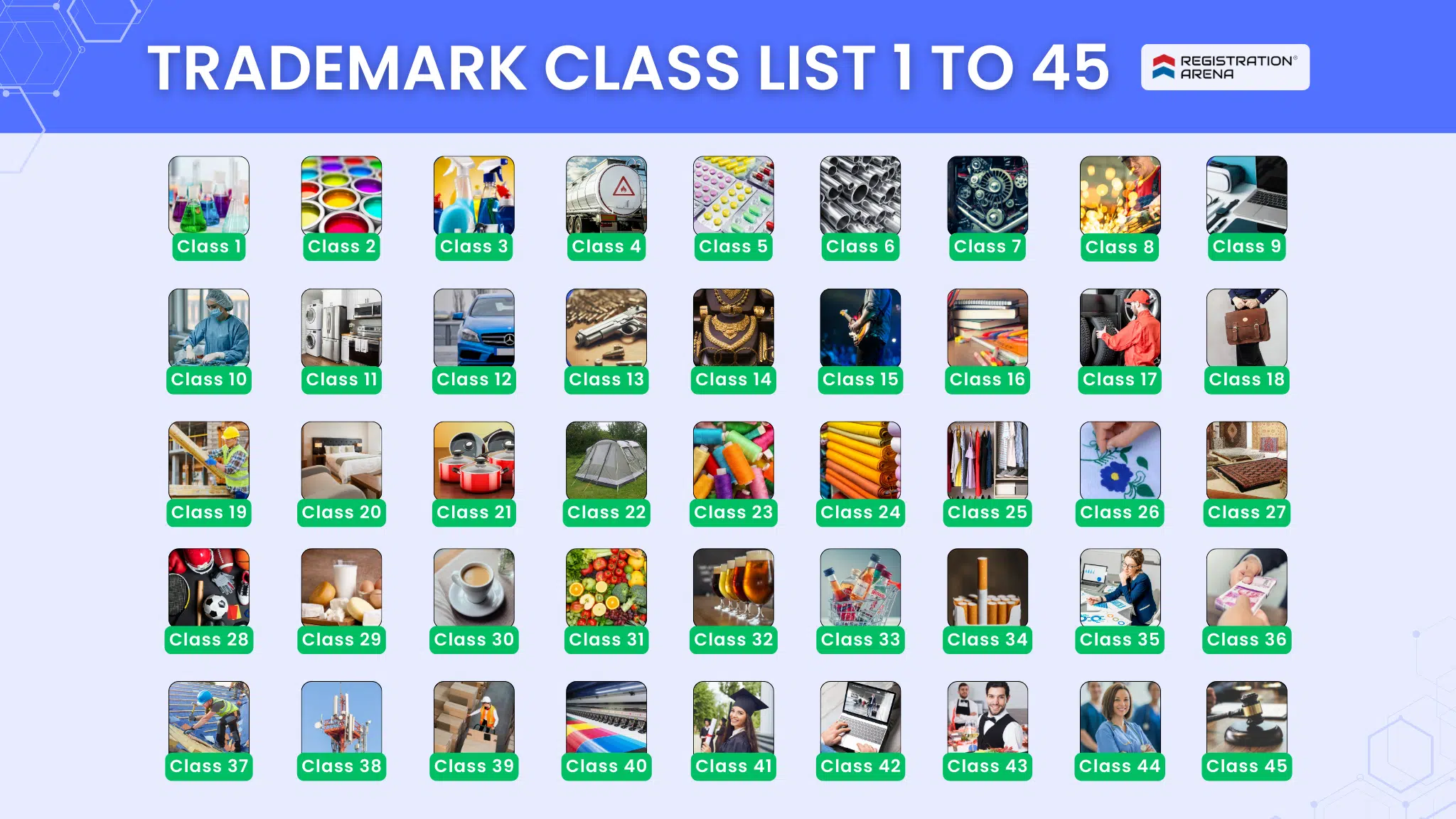
The Nice Classification (NCL), established by the Nice Agreement in 1957, is an international system used to classify goods and services for the purposes of registering trademarks. India, as a signatory, strictly adheres to this system to maintain global standards. The classification is divided into two main categories: Goods (Classes 1 to 34) and Services (Classes 35 to 45).
The primary purpose of this system is to provide a structured framework where similar businesses can coexist without infringing on each other's rights, provided they operate in different classes. For instance, a company selling computer hardware (Class 9) and a company providing educational services (Class 41) can both use the name \"Apex\" without causing consumer confusion.
However, for a business owner, the challenge lies in the overlap. Modern businesses often span multiple categories. A fashion brand doesn't just sell clothes; it might also sell perfume, jewelry, and offer online retail services. At Online Legal Mitra, we ensure your application covers all relevant bases, often filing within 24 hours to secure your priority date.
Classes 1-34: Goods — Most Common for Indian Businesses
The majority of physical products manufactured or sold in India fall within the first 34 classes. For manufacturing hubs across India, from Gwalior to Coimbatore, choosing the correct goods class is the foundation of market exclusivity.
Key Goods Classes Frequently Used: * **Class 3:** Cosmetics and Cleaning Preparations. This includes soaps, perfumes, and hair lotions. * **Class 5:** Pharmaceuticals and Veterinary Preparations. A critical class for India's massive healthcare sector. * **Class 9:** Electronics, Software, and Scientific Apparatus. This covers everything from mobile apps to fire extinguishers. * **Class 14:** Precious Metals and Jewelry. Essential for India's thriving gold and diamond industry. * **Class 16:** Paper, Stationery, and Printed Matter. Used by publishers and office supply companies. * **Class 25:** Clothing, Footwear, and Headgear. The most popular class for fashion startups and garment exporters. * **Class 30:** Coffee, Tea, Spices, and Bakery Products. A vital class for the Indian food processing industry.
When filing under these classes, the description of goods must be precise. Using vague terms can lead to an office action or an objection from the Trademark Registrar. While the government fee for a startup or individual is standard, our professional assistance for Trademark filing is priced at ₹4,999, ensuring your description is "bulletproof." If you are also setting up your manufacturing unit, don't forget that we offer Pvt Ltd registration for ₹6,999, typically completed in 7-10 days.
Classes 35-45: Services — What Tech and Service Companies Need
As India shifts toward a service-oriented economy, Classes 35 to 45 have seen a surge in applications. If your business doesn't sell a physical product but provides value through expertise or digital platforms, these are the classes for you.
* **Class 35:** Advertising and Business Management. This is a "catch-all" class for retail stores, e-commerce platforms, and HR services. If you have a multi-brand outlet, Class 35 is your home. * **Class 36:** Insurance and Financial Services. Covers banking, real estate, and financial consultancy. * **Class 37:** Construction and Repair. Used by real estate developers and maintenance companies. * **Class 38:** Telecommunications. For internet service providers and broadcasting companies. * **Class 41:** Education and Entertainment. This covers schools, coaching centers, and even YouTube channels. * **Class 42:** IT and Software Services. This is the primary class for SaaS companies, web developers, and scientific research. * **Class 43:** Food and Drink Services. Essential for restaurants, hotels, and catering businesses.
For tech startups in Bangalore or Indore, Class 42 and Class 35 often go hand-in-hand. Protecting your software under Class 9 (as a product) and Class 42 (as a service) is a common strategy. You can explore our specific [service page for trademarks](/services/trademark) to see how we bundle these protections for maximum impact. If your service business also requires tax compliance, remember that we provide GST registration for just ₹1,499 in 3-5 days.
Multi-Class Filing: When to Protect in Multiple Classes
Does your business only do one thing? In the modern era, the answer is usually no. A restaurant might sell branded packaged spices (Class 30) while providing dining services (Class 43). A gym might provide fitness training (Class 41) while selling protein supplements (Class 5) and branded gym wear (Class 25).
In such cases, you have two options: 1. **Multiple Individual Applications:** Filing separate applications for each class. 2. **Multi-Class Application (Form TM-A):** Filing a single application that covers multiple classes.
The advantage of a multi-class filing is administrative ease—one application number, one renewal date. However, there is a risk: if one class faces an objection, it might delay the registration of the entire application. At Online Legal Mitra, we analyze your business model to determine if you need a multi-class strategy. We often refer our clients to [our comprehensive guide](/blog/trademark-registration-india-guide) on the full registration process to help them understand the long-term implications of these choices.
Protecting your brand across multiple classes prevents "brand dilution." You don't want someone else selling inferior quality shoes using your premium electronics brand name. For a detailed consultation on multi-class strategy, feel free to reach out to our Gwalior office via WhatsApp for a quick chat.
Consequences of Registering in the Wrong Trademark Class
Registering your trademark in the wrong class is almost as bad as not registering it at all. Here is why:
* **Inability to Sue for Infringement:** If you registered your "XYZ" brand under Class 25 (Clothing) but someone starts selling "XYZ" watches (Class 14), your trademark certificate might not give you the right to stop them unless you can prove your brand is "well-known." * **Wasted Investment:** Trademark registration is a long-term asset. Spending money and waiting 12-18 months for a certificate that doesn't cover your actual business activities is a significant loss. * **vulnerability to Cancellation:** If you register a trademark in a class but don't use it for that specific goods or service for five years, a competitor can apply for its cancellation on the grounds of "non-use." * **Legal Objections:** If you file in a class where a similar name already exists, you will face an objection, even if you could have safely filed in a different, more relevant class.
Avoid these pitfalls by working with professionals who understand the nuances of the Nice Classification. At Online Legal Mitra, we provide a preliminary search and class consultation as part of our package. Our goal is to ensure that your ₹4,999 investment provides the maximum possible protection for your brand's future.
Frequently Asked Questions
Which trademark class should I choose for a clothing brand?+
What class covers software, apps, and IT services in India?+
Can I file a trademark in multiple classes in a single application?+
What happens if a competitor uses my brand name in a different class?+
Is it possible to add more classes to an existing trademark registration?+
What trademark class should I choose for a restaurant or food business?+
Which class is correct for an e-commerce marketplace or online store?+
What class should I choose for education, coaching, or online training services?+
How many trademark classes should a new startup register in?+
Written by
Online Legal Mitra Editorial Team
Editorial Team
Need Help with Trademark?
Get expert guidance from our professionals. Book a free consultation today!
Chat on WhatsAppRelated Articles
Continue reading with these related articles
Trademark Registration India 2025: Full Process Guide
Protect your brand with trademark registration in India. Learn about trademark classes, search process, filing steps on IP India portal, objection handling, costs, and how to secure your brand in 24 hours. Complete 2025 guide.
Read ArticleComprehensive Trademark Search India: The Ultimate 2025 Guide
A detailed guide on conducting a trademark search in India, using the IP India portal, and why a professional search is critical before filing your application.
Read ArticleTrademark Registration Cost in India: A Comprehensive Guide for 2025
Understanding the complete trademark registration cost in India is essential for any business. Learn about government fees, professional charges, and how to save costs in 2025.
Read Article